Author: Hyundai Heat Pump
Published on: 02 September 2026
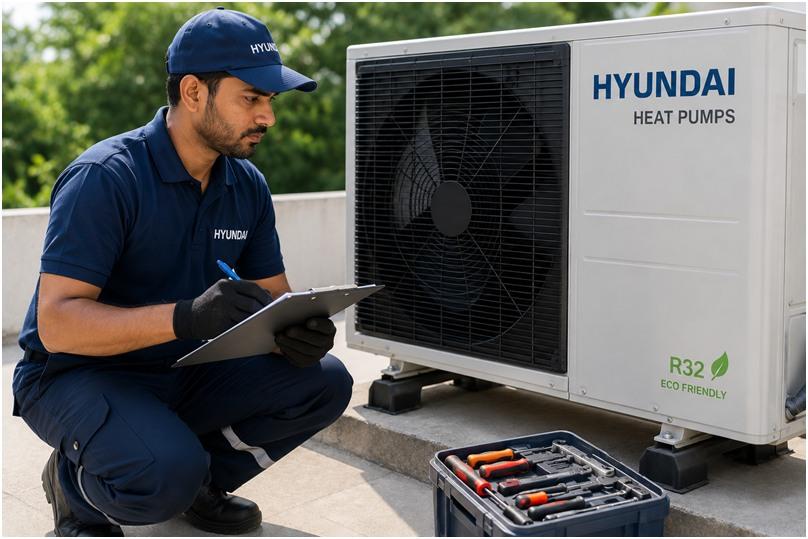
Heat pump maintenance means checking the air filter, cleaning the outdoor coil, testing water flow, and scheduling a professional service visit once a year. A well-maintained heat pump keeps its COP near factory rating for over a decade, while a neglected one can lose 20 to 30 percent efficiency within just a few years.
Skipping maintenance is the single biggest reason a heat pump stops delivering the savings it promised on day one. This guide covers a full heat pump maintenance guide, what a proper heat pump servicing visit includes, and simple heat pump troubleshooting steps before you ever call for support.
Heat pump maintenance matters because dust, hard water, and refrigerant drift silently erode efficiency long before a unit actually breaks down. A poorly maintained heat pump works harder to hit the same water temperature, which raises your electricity bill month after month. Regular upkeep protects both performance and the warranty on your unit.
A heat pump is a closed thermodynamic loop, and every part of that loop degrades a little with daily use. Dust on the coil, scale in the tank, and a clogged filter all force the compressor to run longer for the same result.
None of these issues appear overnight, which is exactly why routine maintenance catches them before the compressor pays the price.
You should perform basic heat pump maintenance monthly and schedule a full professional heat pump servicing once every 12 months. Homes with hard water or heavy dust exposure benefit from servicing every 6 to 8 months instead. Coastal and industrial areas need more frequent coil checks due to faster corrosion and buildup.
Spacing tasks out by frequency keeps maintenance manageable instead of overwhelming. Monthly checks take minutes, while the annual visit needs a trained technician.
Following this simple calendar keeps small issues from ever becoming expensive repairs.
A professional heat pump servicing visit includes checking refrigerant pressure, testing electrical connections, cleaning the coil, inspecting the compressor, and verifying safety sensors. A trained technician also checks the water tank for scale buildup and confirms the COP is close to the rated specification. This full check catches issues a homeowner cannot see.
A thorough visit covers both the refrigeration side and the water side of the system. Each check targets a specific failure point that builds up gradually over months of operation.
Rhinox's own Multi-layer Safety Protection technology already includes built-in refrigerant leakage detection and anti-freeze logic, but a technician visit still confirms those systems are functioning correctly year after year.
You can clean a heat pump yourself by clearing debris from the outdoor unit, rinsing the coil gently with a garden hose, and wiping down the filter with mild soapy water. Always switch off power at the breaker before touching any part of the unit. Skip pressure washers, since they can bend the delicate coil fins.
Basic cleaning does not require special equipment, just a careful, methodical approach. Rushing this step is what leads to bent fins or accidental short circuits.
Fifteen minutes of careful cleaning every few months keeps the unit breathing properly between full technician visits.
Heat pump servicing involves refrigerant checks, electrical diagnostics, and internal component inspection that only trained technicians can safely perform. DIY maintenance covers surface-level tasks like filter cleaning and debris removal that any homeowner can handle. Both are necessary, but they are not interchangeable.
Knowing where the line sits prevents both under-maintenance and unsafe DIY attempts on parts that need certified handling.
| Feature | DIY Maintenance | Professional Servicing |
|---|---|---|
| Frequency | Monthly to quarterly | Annually, or every 6–8 months |
| Tools required | Garden hose, soft cloth | Pressure gauges, electrical meters |
| Refrigerant handling | Never attempted | Certified technician only |
| Safety risk | Low, with power off | Requires trained expertise |
| Cost | Free, your own time | Service visit charge applies |
| Covers | Filter, coil surface, debris | Compressor, pressure, wiring, tank |
Treat DIY tasks as the habit that protects the system daily, and professional servicing as the deeper check that catches what your eyes cannot.
Warning signs that a heat pump needs troubleshooting include unusual noises, inconsistent water temperature, longer heating cycles, and visible frost on the outdoor coil. Any error code on the display panel also signals it is time to investigate before the issue spreads to other components. Catching these signs early usually means a simpler, cheaper fix.
Every heat pump communicates trouble before it fails completely. Learning to spot the pattern saves both money and a cold morning shower.
Spotting even one of these early is reason enough to schedule a check before the small fault becomes a bigger repair bill.
You troubleshoot common heat pump problems at home by first checking the power supply, filter cleanliness, and any visible obstruction around the outdoor unit. Most no-heat or low-heat issues trace back to a dirty filter, a tripped breaker, or blocked airflow rather than a major component failure. Confirm these basics before assuming the worst.
A few checks take less than ten minutes and resolve a surprising number of service calls without needing a technician visit at all.
If these basic checks do not resolve the issue, note the error code and any unusual sound before contacting Hyundai Heat Pump customer service for a technician visit. The ENERGY STAR heat pump water heater guide echoes this same routine, noting that filter and condensate line care are the two most common maintenance needs across all heat pump water heaters.
How often should a heat pump filter be cleaned? Clean the filter monthly during heavy-use months and at least every two months otherwise. A clogged filter is the single most common cause of reduced heating performance in Indian homes.
Can I service my heat pump myself? You can safely handle filter cleaning, debris removal, and coil rinsing yourself. Refrigerant checks, electrical diagnostics, and compressor work require a certified technician and should never be attempted at home.
What does an error code on my heat pump mean? Error codes point to a specific fault, from a sensor issue to a pressure imbalance. Note the exact code and contact support rather than guessing, since codes vary by model.
Why is my heat pump making a loud noise? Loud noise usually means fan bearing wear, loose panel screws, or debris caught in the outdoor unit. Switch off the unit and inspect visually before calling for a service visit.
Does hard water affect heat pump maintenance? Yes. Hard water accelerates scale buildup inside the tank and condenser coil, which reduces heat transfer efficiency. Homes with hard water should schedule tank flushing more frequently than the standard annual visit.
How much does professional heat pump servicing cost in India? Servicing costs vary by region, unit size, and whether the unit is still under warranty. In-warranty repairs are typically covered per your warranty terms, so check your registration status first.
Consistent heat pump maintenance is what separates a system that performs like new for fifteen years from one that quietly loses efficiency within a few winters. A few minutes of monthly DIY care, paired with one solid annual servicing visit, protects both your investment and your hot water bill.
Ready to book a service or have a question about your unit? Reach Hyundai Heat Pump customer service at the toll-free helpline 1800-120-6232, or explore the full range of Hyundai heat pump products to see which model fits your home.
No related articles found.

Heat Pump for Hospitals: A Guide to Reliable and Energy-Efficient Hot Water Systems
11 September 2026

Heat Pump for Hotels: How to Reduce Hot Water Energy Costs Without Compromising Guest Comfort
10 September 2026
Heat Pump Water Heater for Home: How to Choose the Right System for Your Household
02 September 2026
Heat Pump Water Heater Installation: Requirements, Process and Key Considerations
02 September 2026

Dehumidifier vs Air Conditioner: Which Is Right for You?
24 July 2026

What Are Industrial Heat Pumps and How They Work
24 July 2026
No related articles found.