Author: Hyundai Heat Pump
Published on: 02 September 2026
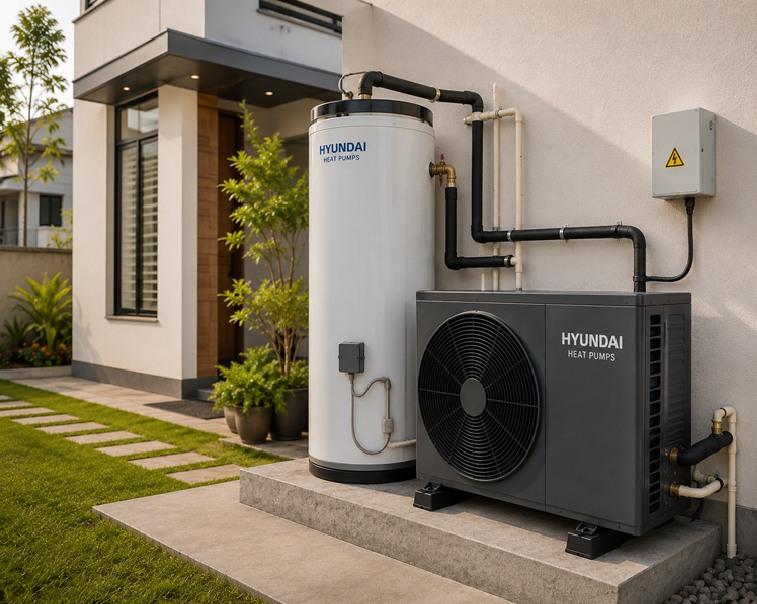
Choosing a heat pump water heater for home use requires more than comparing product prices. Your household size, hot-water demand, available space, climate, and installation conditions all matter.
This guide explains how to choose a suitable home heat pump water heater, what to check before buying, and how Hyundai's residential options fit different household needs.
A heat pump water heater transfers heat from surrounding air into water using electricity. It moves heat instead of generating all the heat directly, which can make the process more energy efficient than conventional electric resistance heating.
For residential use, the system needs suitable airflow, water connections, electrical supply, and enough space for installation. The right setup also depends on the household's hot-water demand and the selected model.
Hyundai's domestic range includes R32 and R410A water heat pump options designed for residential applications. [Hyundai Domestic Water Heat Pump Products]
A home heat pump takes available heat from surrounding air and transfers it to the water. This approach is different from an electric resistance heater, which directly converts electricity into heat.
The main advantage is efficient heat transfer, but performance still depends on correct sizing and installation.
The right residential heat pump water heater should match your household's actual hot-water needs. Family size alone does not determine capacity because usage patterns can vary between homes.
Consider morning demand, bathing habits, kitchen use, laundry requirements, and periods when several people need hot water together. ENERGY STAR also recommends considering tank sizing and manufacturer requirements when selecting a system.
Hyundai's domestic RS Series is available in several power capacities, allowing selection based on the application's requirements. [Hyundai Domestic Hot Water Heat Pump RS Series]
Start with actual usage instead of choosing a unit based only on advertised capacity. A professional assessment can help match the equipment with your household and installation conditions.
Correct sizing helps avoid choosing equipment that does not suit your usage pattern.
There is no single capacity that suits every household. The required system depends on water consumption, peak demand, storage needs, and the specific heat pump's output.
A smaller household may have different requirements from a larger family or multi-unit residence. Choosing capacity should also account for recovery time and how frequently hot water is used throughout the day.
Hyundai's domestic RS Series includes 4kW, 6kW, 8kW, 10kW, 12kW, and 18kW options. The appropriate selection should be based on the actual application rather than the household size alone. [Hyundai RS Series Specifications]
Capacity decisions should consider both demand and installation conditions. A qualified installer can assess these factors before recommending the final configuration.
The goal is a system that provides suitable hot water without unnecessary oversizing.
A home heat pump water heater can be suitable for Indian households when the system matches local conditions and the application's requirements. Installation location, ambient conditions, water quality, electrical supply, and hot-water demand all deserve attention.
Hyundai's domestic RS Series includes features such as automatic defrost, high-pressure protection, and a tube-in-shell heat exchanger. The manufacturer also lists operation across different residential applications. [Hyundai Domestic Hot Water Heat Pump]
However, no heat pump should be treated as universally suitable for every home. The selected model's specifications should always guide the installation decision.
Local conditions can influence installation planning and ongoing operation. Hard-water areas, humid environments, and limited outdoor space may require additional planning.
A site assessment makes the selection more practical and avoids assumptions about performance.
A heat pump needs adequate airflow and service access around the equipment. Restricting airflow can affect how the system operates, while limited access can make maintenance more difficult.
ENERGY STAR notes that heat pump water heaters require sufficient air volume and installation space, while exact requirements vary by manufacturer and model.
The installation area should also allow practical water and electrical connections. Always follow the specific Hyundai model's installation instructions rather than applying generic clearance numbers.
The best location combines airflow, accessibility, safe connections, and practical drainage. It should also suit the home's layout and avoid unnecessary disruption to occupants.
Good installation planning supports easier maintenance and dependable everyday operation.
The best heat pump water heater for home is not necessarily the largest or most expensive model. It should provide suitable capacity, operating features, protection, and installation compatibility for the household.
Hyundai's domestic RS Series lists automatic operation, automatic defrost, high-pressure protection, a tube-in-shell heat exchanger, and hot-water output up to 60°C. [Hyundai RS Series Domestic Water Heat Pump]
These features should be assessed alongside the home's actual requirements rather than considered in isolation.
Focus on features that affect suitability, operation, safety, and maintenance. Product specifications should always be checked for the exact model being considered.
A feature-rich system still needs proper sizing and installation to work effectively.
Comparing systems works best when you assess specifications rather than relying on price alone. Look at capacity, refrigerant, water temperature, installation requirements, controls, protection features, and suitability for your application.
Hyundai's product range includes both R32 and R410A domestic water heat pump options. Their specifications differ, so homeowners should compare the exact model that fits their requirements. [Hyundai Heat Pump Product Range]
| Feature | What to Check | Why It Matters |
|---|---|---|
| Capacity | Heat output and demand | Matches household usage |
| Water temperature | Maximum rated output | Supports required hot-water needs |
| Refrigerant | Model-specific refrigerant | Helps compare available systems |
| Installation | Space and airflow | Supports suitable operation |
| Protection | Safety and operating controls | Adds appropriate system safeguards |
| Maintenance | Access and service needs | Supports long-term ownership |
Avoid choosing a system from one specification alone. A low purchase price may not represent the best fit if capacity or installation requirements are unsuitable.
A balanced comparison gives homeowners a clearer basis for choosing equipment.
Installation has a direct role in how a heat pump operates. Correct airflow, water connections, electrical supply, drainage, and equipment placement all matter.
The U.S. Department of Energy explains that heat pump water heaters move heat rather than generating it directly, while ENERGY STAR highlights airflow, tank sizing, and installation space as important design considerations.
For a Hyundai system, the installation should follow the requirements for the specific model. Professional installation is especially useful when the site has limited space or unusual water-heating demands.
A proper installation should cover the complete system rather than only positioning the heat pump. The installer should check the connections and operating conditions before handover.
Proper installation helps the system match the conditions for which it was selected.
A heat pump water heater can be worth considering when a household wants an alternative to conventional electric water heating and has suitable installation conditions. The technology can offer higher efficiency because it transfers heat rather than creating all heat directly.
The decision should still consider purchase cost, installation requirements, household demand, available space, and the model's specifications. A system that fits the home is more important than choosing based on a general efficiency claim.
Hyundai provides domestic water heat pump options for residential applications and offers product information for homeowners evaluating different systems. [Hyundai Heat Pump Solutions for Homes]
A heat pump may make sense when your household has consistent hot-water demand and suitable installation conditions. It is particularly worth assessing during a new installation or water-heating system replacement.
The right choice depends on the home's needs, not simply the product category.
Is a heat pump water heater good for home use? Yes, it can be suitable for homes when capacity, installation space, electrical supply, and hot-water demand match the selected system. Hyundai offers dedicated domestic water heat pump models for residential applications.
What size heat pump water heater does a family need? There is no universal size. Household members, daily consumption, peak usage, storage requirements, and system output should all be considered before selecting capacity.
Does a heat pump water heater need outdoor space? Many systems need adequate surrounding air and service clearance. Exact requirements depend on the model, so homeowners should follow the manufacturer's installation instructions.
Are heat pump water heaters energy efficient? Heat pump water heaters transfer heat instead of generating all heat directly. This can make them more efficient than conventional electric-resistance water heaters.
How long does a home heat pump water heater last? Lifespan depends on the model, installation, water conditions, operating conditions, and maintenance. Following the manufacturer's service recommendations is important for long-term operation.
Can a heat pump water heater work with hard water? Some systems are designed with heat exchanger features intended to handle scale-related concerns. Hyundai's RS Series uses a tube-in-shell heat exchanger and should still be evaluated according to local water conditions.
The right heat pump water heater for home use should match your household's demand, available installation space, electrical supply, water conditions, and preferred operating features. Capacity and installation requirements should be assessed before making a purchase.
Hyundai's domestic range provides different options for residential hot-water applications. Homeowners can review the available Hyundai domestic heat pump water heaters and compare their specifications before selecting a suitable system.
For a more specific recommendation, the next step is to discuss your household's hot-water needs and installation conditions with the Hyundai team.
No related articles found.
Heat Pump for Hospitals: A Guide to Reliable and Energy-Efficient Hot Water Systems
11 September 2026
Heat Pump for Hotels: How to Reduce Hot Water Energy Costs Without Compromising Guest Comfort
10 September 2026
Heat Pump Maintenance Guide: How to Keep Your System Efficient and Reliable
02 September 2026
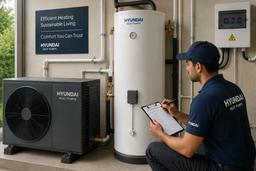
Heat Pump Water Heater Installation: Requirements, Process and Key Considerations
02 September 2026

Dehumidifier vs Air Conditioner: Which Is Right for You?
24 July 2026

What Are Industrial Heat Pumps and How They Work
24 July 2026
No related articles found.